Dry superconducting magnet system with split pair magnets and optical access. Temperature range of 1.6 K to 300 K and a sample space of 30 mm.
Dry systems do not require the use of cryogenic liquids to provide the 4 K environment. Instead, pulse tube refrigerators are used. These enable push-button operation, can reduce the cost of ownership, and negate the need for a helium liquefier.
Our Cryofree® (cryogen free) range of products provides the user with much more experimental space and a larger sample plate, due to not needing a dewar surrounding the system containing the liquid helium for cooling. Mechanical vibrations from the pulse tube refrigerator are significantly reduced using a comprehensive range of vibration isolation techniques.
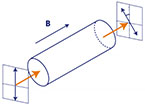
Enables investigations of faraday effect, magneto circular dichroism and other high field optical effects.

Combining high magnetic fields with optical access for Raman magneto-spectroscopy and photoluminescence.
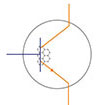
Characterisation of quantum dots and nano-devices for photonic applications.
| Temerature Range: | 1.6 K to 300 K |
| Standard Sample Probe Temperature Stability: |
± 0.1 K |
| System Cooldown: | ~ 40 hours from room temperature to 4 K |
| Standard Sample Probe Cooldown: | ~ 90 minutes from room temperature to < 5 K |
| Continuous System Operation: | Typically > 4 weeks |
| Magnet Ramp to Full Field: | ≤ 60 minutes |
| Variable Temperature Insert Sample Space Diameter: |
30 mm |
For additional product information:
Contact Our Sales TeamFor techniques requiring optical excitation prior to or during the measurement, access for light at the chosen frequency and polarisation is necessary. Choosing the right solution to provide low vibration, large open access, short working distances and a uniform optical path enables you to successfully characterise your device, down to the lowest cryogenic temperatures.
In addition to providing optical access both parallel and perpendicular to the magnetic field, appropriate windows must be fitted to permit radiation to pass through the sample space. The type of window material and surface coating selected will be determined by the wavelength and intensity of the radiation, the environmental temperature and whether or not the light is polarised.
For UV/Visible, Raman, FTIR, Fluorescence, Photoluminescence and THz applications, optical access is designed such that:
Whatever the requirements of your experiment may be, we have the solutions that will allow superior optical access for quick and efficient sample characterisation.
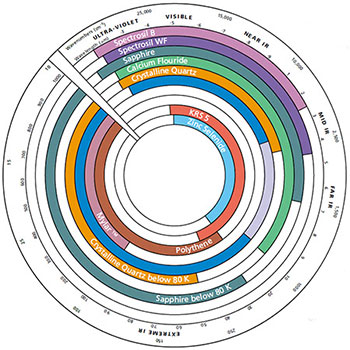
Window Materials
A wide range of different window materials are available to tailor SpectromagPT to suit your particular application The material selected is determined by the wavelength and intensity of the radiation, the environmental temperature and whether or not beam polarization is required. The cold window needs to seal against superfluid helium which means it can sometimes be advantageous to use different materials for cold and warm windows.
Fused quartz is generally suitable for optical and mid IR wavelengths while Calcium Floride and Zinc Selenide extend into the FIR region. Birefringent materials like Sapphire and crystalline Quartz open up to THz wavelengths when they are cold.
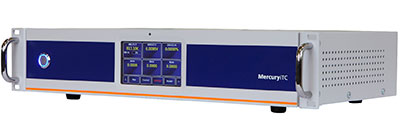
The MercuryiTC is a versatile cryogenic environment controller. In its basic form it includes a single channel high-resolution (24 bit) temperature measurement circuit which supports all the standard cryogenic sensors (ruthenium oxide, cernox, silicon diodes, platinum, thermocouple and RhFe). With the constant voltage mode it enables reliable, accurate temperature measurement using negative temperature sensors (NTC) down to below 250 mK. The base unit enables PID loop configuration control of a single heater output up to 80W (40 V, 2 A).
Find Out More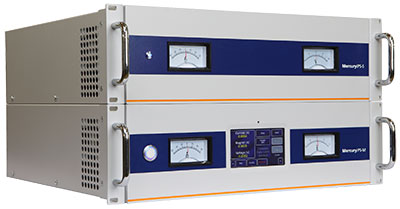
The MercuryiPS is an intelligent fully configurable magnet power supply system. It enables automated control of a wide range of superconducting magnets, including NMR, high field, beamline and Vector Rotate magnet systems. MercuryiPS is a bi-polar, high-stability, four quadrant power supply with incorporated quench protection. It includes temperature control of the main high-power sense resistor to prevent output current drift. The MercuryiPS is fully controllable by remote command via TCP/IP, USB, RS232 or optional GPIB.
Find Out MoreCopyright © 2025 Quantum Design Oxford